
One of the oldest forms of medicine, still trusted today
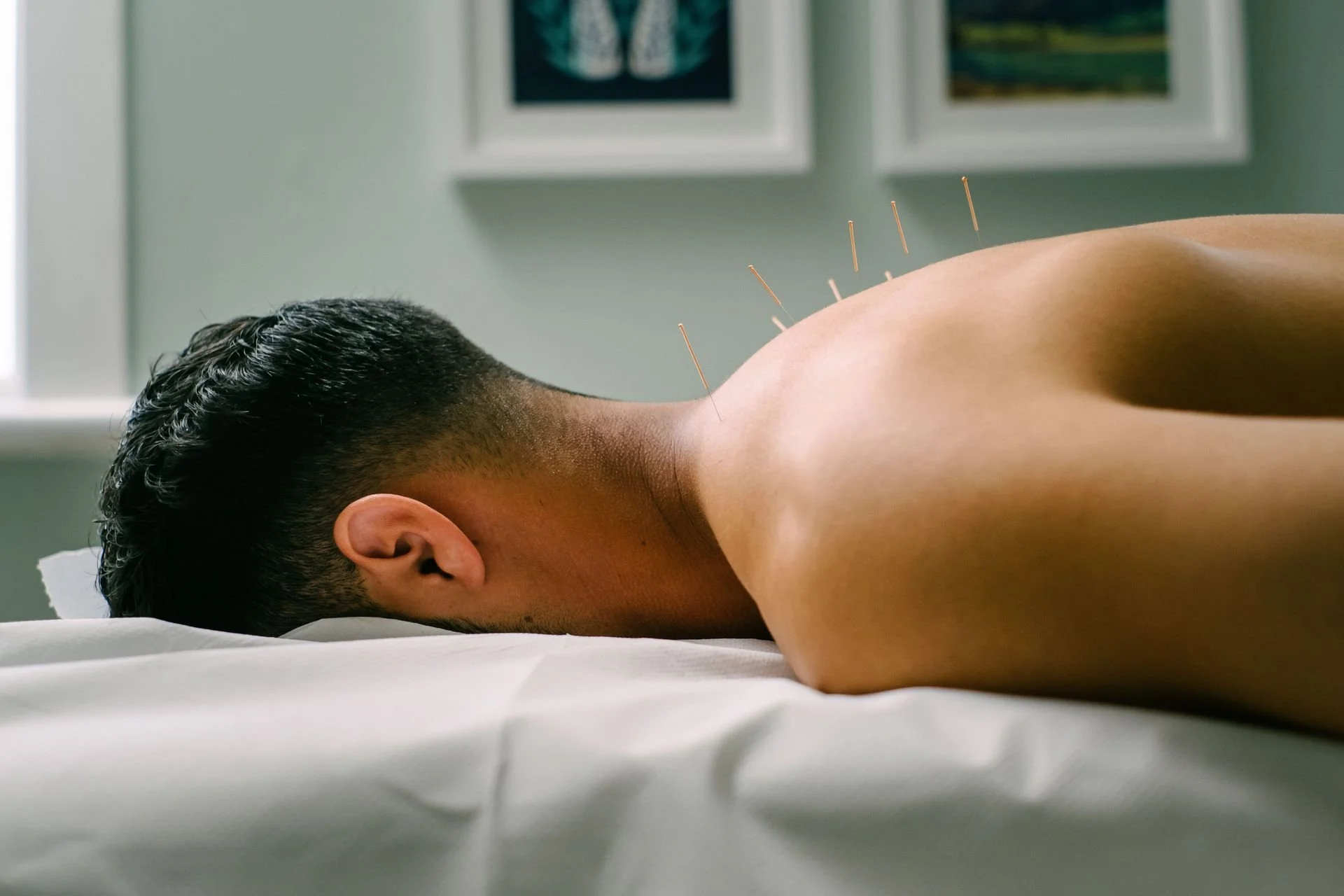
Acupuncture has been used for over 3000 years as part of Traditional Chinese Medicine (TCM). At its simplest, acupuncture is the insertion of very fine, sterile needles into specific points on the body. It treats the body as a whole, looking at how different symptoms and aspects of your health connect rather than treating each one in isolation.
In TCM, we talk about the movement of Qi (energy) and blood through the body, and how disruption to this can contribute to pain and illness. Acupuncture treatment allows Qi and blood to move more smoothly to improve and prevent pain, discomfort, illness and disease.
Modern research gives us another way of understanding what's happening: acupuncture stimulates the nervous system and can influence pain processing, circulation, inflammation and the body's stress response. It can also affect the release of neurotransmitters and our own natural pain-relieving chemicals. Which is why most people fall asleep during treatment, and feel sleepy/relaxed directly after.
There is a wealth of evidence supporting the efficacy of acupuncture for various conditions. The British Acupuncture Council has compiled various fact sheets for the most commonly researched conditions such as back pain, headache, anxiety and depression.
You’re not the only one wondering…
-
Acupuncture is generally not painful – most people find treatment very relaxing and fall asleep.
The needles are very fine and any sensations could be tingling, warmth or gentle pressure.
-
At your first session, I will ask you lots of questions (that might seem irrelevant to your main issue) which helps me to understand your system and why/how things have happened. You will then receive a treatment and be able to relax for at least 15-20 minutes.
Each session thereafter will involve a catch up at the beginning and the treatment itself, which could also include tui na massage, gua sha, moxa or cupping. -
There is no simple answer. It depends on your problem areas, how long they have been troubling you, how complex your case may be, how frequently you can come for treatment.
At our first session, I will advise on an initial treatment plan which typically ranges from 6-12 sessions.
Generally, most patients enjoy their relief, start feeling better in other areas and then use acupuncture as a maintenance and wellbeing tool. It is an excellent preventative medicine.
-
Loose clothing that can be rolled up/down is best. I also have plenty of towels/blankets if you do need or prefer to remove any items of clothing.
-
Yes, the needles are completely sterile and single use and then disposed of immediately after use within a sharps container.
When performed by a correctly qualified and licensed practitioner, acupuncture is a safe, gentle and holistic treatment. I hold a BSc degree qualification and Licentiate in Acupuncture, and am licensed by the British Acupuncture Council (BAcC) – the UK’s leading professional body for traditional acupuncturists.
Selecting a BAcC-accredited acupuncturist means choosing a practitioner committed to the highest standards of safety, competence, and professionalism.